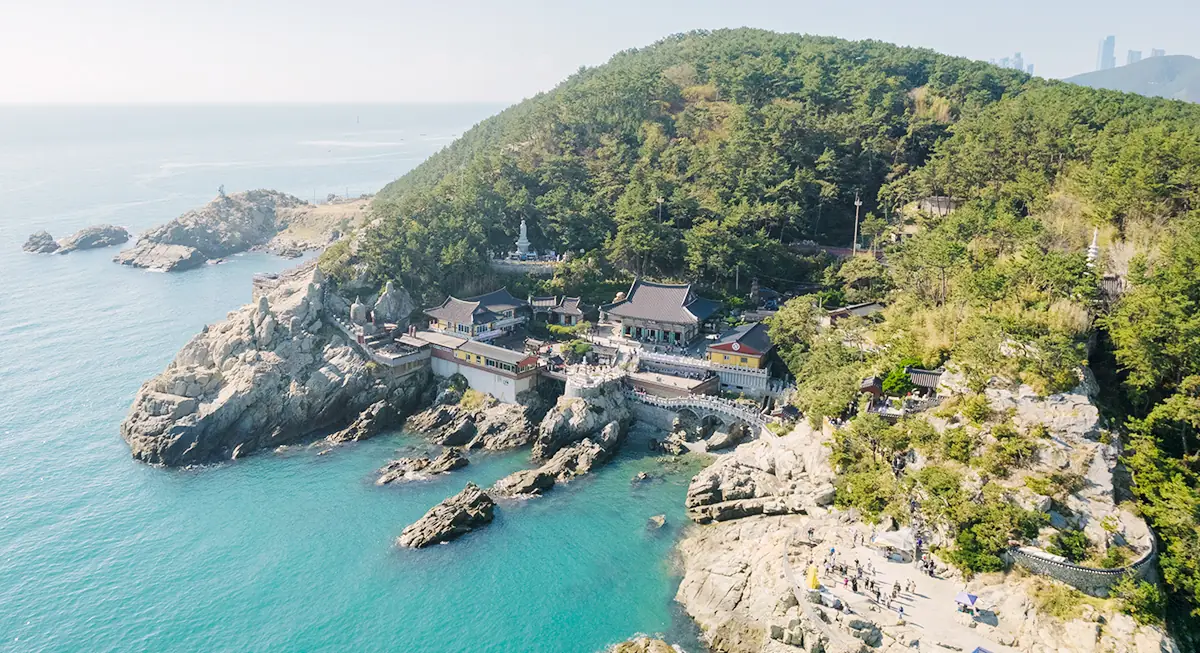
Most temples in South Korea are set in the mountains. But that’s not the case with Haedong Yonggungsa. This one stands along the coast in Busan, facing the open sea with waves breaking just below its stone paths.
The setting gets your attention first, but what stays with you comes after. As you walk through, small details tied to luck and wishes start to appear. It shapes how people move through the space and what they take from the visit.
Built Where Mountains Meet The Sea
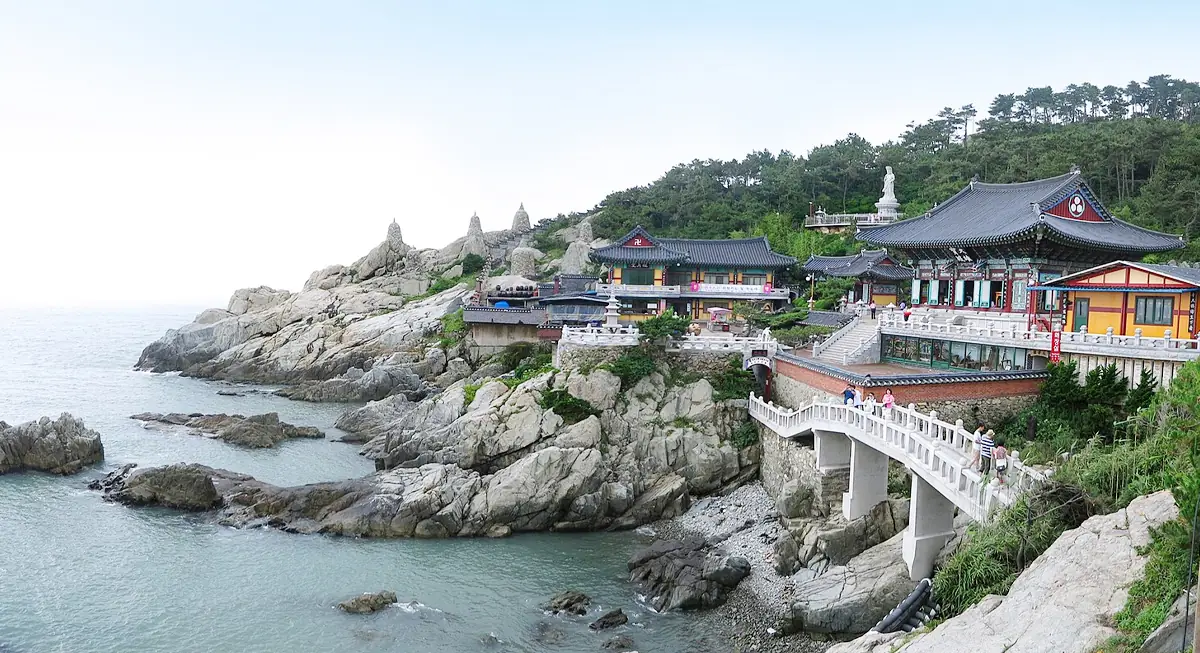
Haedong Yonggungsa dates back to 1376, when the monk Naong Hyegeun established it along Busan’s northeastern coast.
The location followed pungsu jiri, a Korean geomancy system that looks at balance and energy in the landscape. A place where mountains meet the sea was seen as especially favorable, linked with protection and prosperity.
Most temples in Korea sit in forested hills, but this one opens directly to the coastline. The ocean stays in view, and the sound of waves carries through the entire complex.
The temple began with a clear purpose. Tradition holds that Naong built it to honor a sea deity and to pray for peace, safety, and abundance during a period of drought and hardship. Over time, that purpose expanded. What started with prayers for fishermen’s safety grew into a place where people arrive with specific requests shaped by everyday concerns.
Where The “Lucky Secret” Reveals Itself
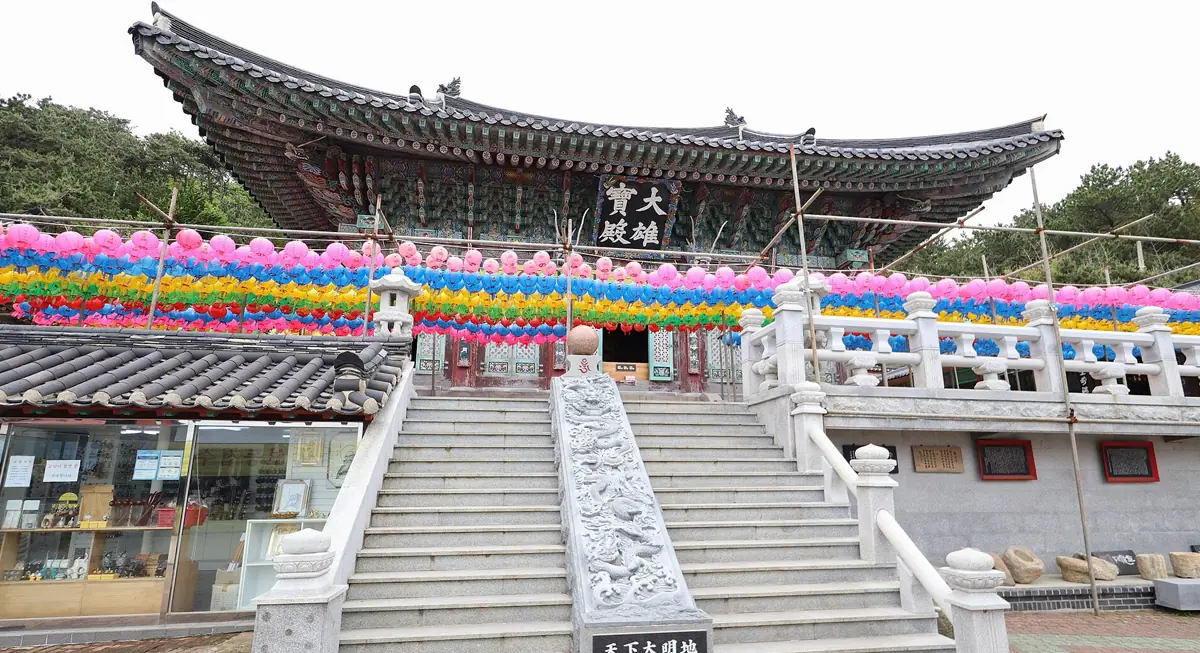
Reaching the main temple requires descending a stone pathway with 108 steps. In Buddhist teaching, this number represents human desires that must be overcome. Along the path, statues of the 12 animals of the Chinese zodiac mark the route, each linked to personality traits and fortune.
The layout creates a gradual transition. The movement from street level down toward the sea shifts attention from the surroundings to the temple itself.
Haedong Yonggungsa is organized around specific prayer points rather than a single central ritual.
One of the most notable is the Traffic Safety Pagoda, where visitors pray for protection while traveling. It is the only structure of its kind in South Korea, guarded by four stone lions that represent joy, anger, sadness, and happiness.
Other areas focus on clearly defined outcomes. Visitors pray for academic success, long life, improved health, or the birth of a son. A large statue of the Goddess of Mercy stands facing the ocean, tied to protection and compassion. Nearby, a shrine dedicated to the Healing Buddha draws visitors who are seeking relief from illness.
Why It Stands Out
Beyond its layout and views, Haedong Yonggungsa is known for the beliefs people associate with it.
Stories around the Goddess of Mercy statue mention unusual patterns, like snow not settling heavily in the area and a five-colored light appearing soon after the statue was placed. These details are often shared by visitors and locals alike.
They’ve become part of how the temple is understood today, alongside its history and rituals, and they shape why many people see it as a place connected to luck and signs.