Every January in Switzerland’s Valais canton, thousands gather for a winter event inspired by a centuries-old local legend. The story centers on a woman accused during the late medieval period of killing her husband, Sepp vom Hegdorn. Rumors claimed she could turn into a raven and cause trouble in the village.
After her husband died, possibly in an accident, suspicion turned into criminal charges, and she was executed. While historians cannot verify every detail, the tale spread through Alpine communities by word of mouth. Over time, the grim story evolved into folklore, and by the late twentieth century, it had become a symbolic winter tradition that draws skiers, locals, and tourists alike.
A Ski Race Turned Folklore Into Tradition

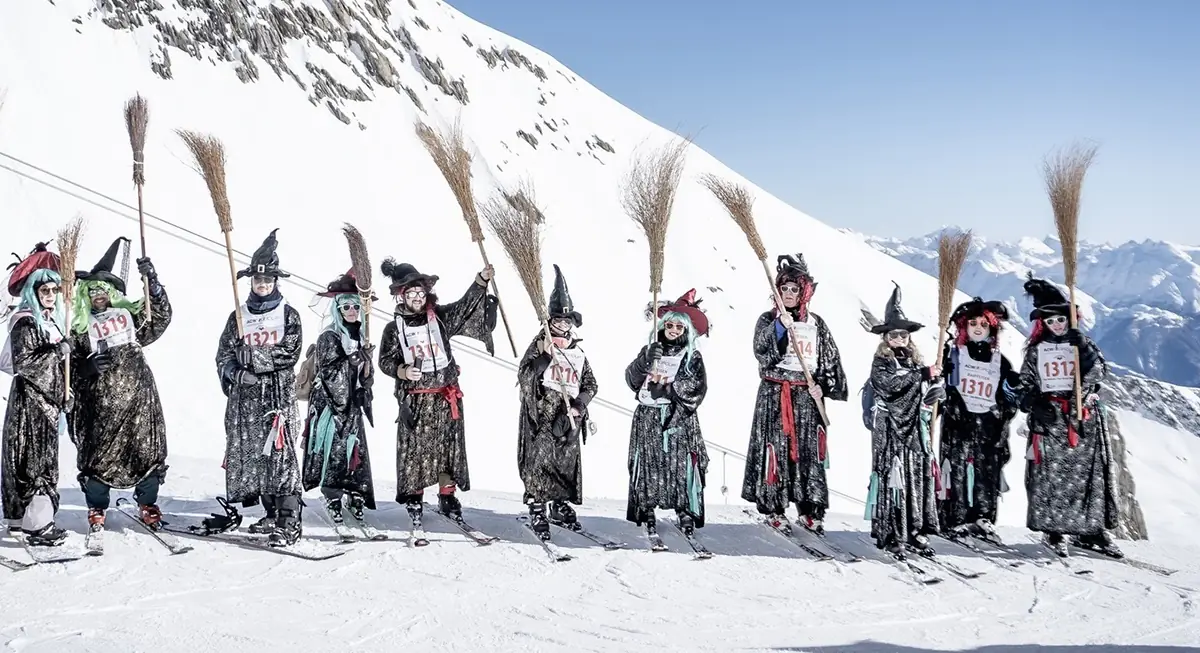
In 1983, the Belalp Ski Club created a downhill race inspired by the legend. The goal was to bring visitors during a quiet winter period and celebrate local history. The race, known as Belalp Hexe, now runs along a roughly 12-kilometer Alpine route between Hohstock and Blatten, with competitive skiers racing at full speed, often finishing in under 10 minutes.
Costumed participants take a slower pace while stopping along the course to share food, drinks, and jokes with spectators. Recent events include more than 1,000 participants, including serious racers and recreational “witches.” New additions like vertical climbing races covering over 1,000 meters of elevation show how the festival keeps evolving.
Women Became The Face Of The Event
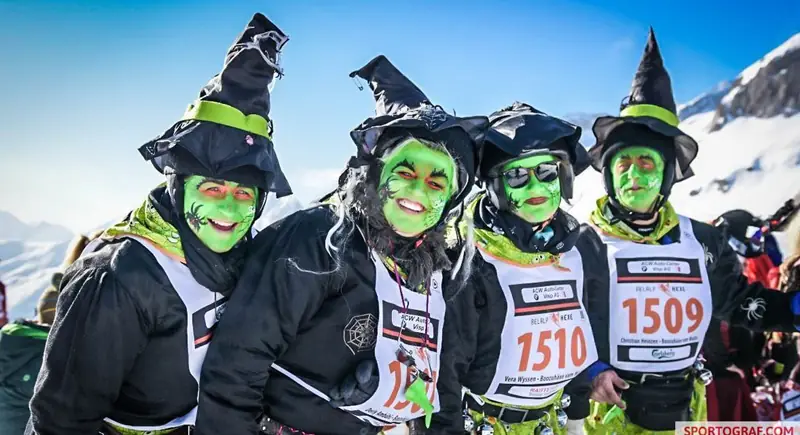
Women lead the visual identity of the festival mostly because the legend centers on a female figure. Over time, the costume became about reclaiming the narrative. Groups of friends, families, and clubs design matching outfits with green face paint, pointed hats, and decorated broomsticks.
The event also removes barriers that can make high-level winter sports feel intimidating. Costumes add humor and group energy, and encourage participation across age groups and skill levels. Kids compete in their own races, and many participants join mainly for the social side. Judges award prizes for costumes, often handing out traditional witch masks.
More Than Just A Race
The festival lasts about a week and includes concerts, themed parties, and food events centered on regional dishes like fondue. Organizers built the event partly to support local tourism during a slow period, and it worked. Thousands now travel to the region each winter specifically for this festival.
Belalp Hexe shows how communities can mold uncomfortable history into something social and meaningful. Instead of letting the legend fade, locals turned it into a celebration of identity, sport, and winter culture.